A Homerun to Happiness
- Arnav

- Feb 9, 2025
- 14 min read

I never quite understood kids. Believe it or not, I used to be one, but that doesn't mean I get them. It's ridiculous how they can go along with their life, enjoying whatever unmeaningful childhood activity they participate in daily, like hopscotch or hide-and-seek. Kids are like sponges for happiness, soaking it up and spilling it into everything they do. It's strange to me how much they can cling to that joy, unburdened by the realities the rest of us face. Young children especially can cry one minute after a scraped knee, and then, just as quickly as they fall, they're running around, filling the air with laughter, simply happy to be with other kids.
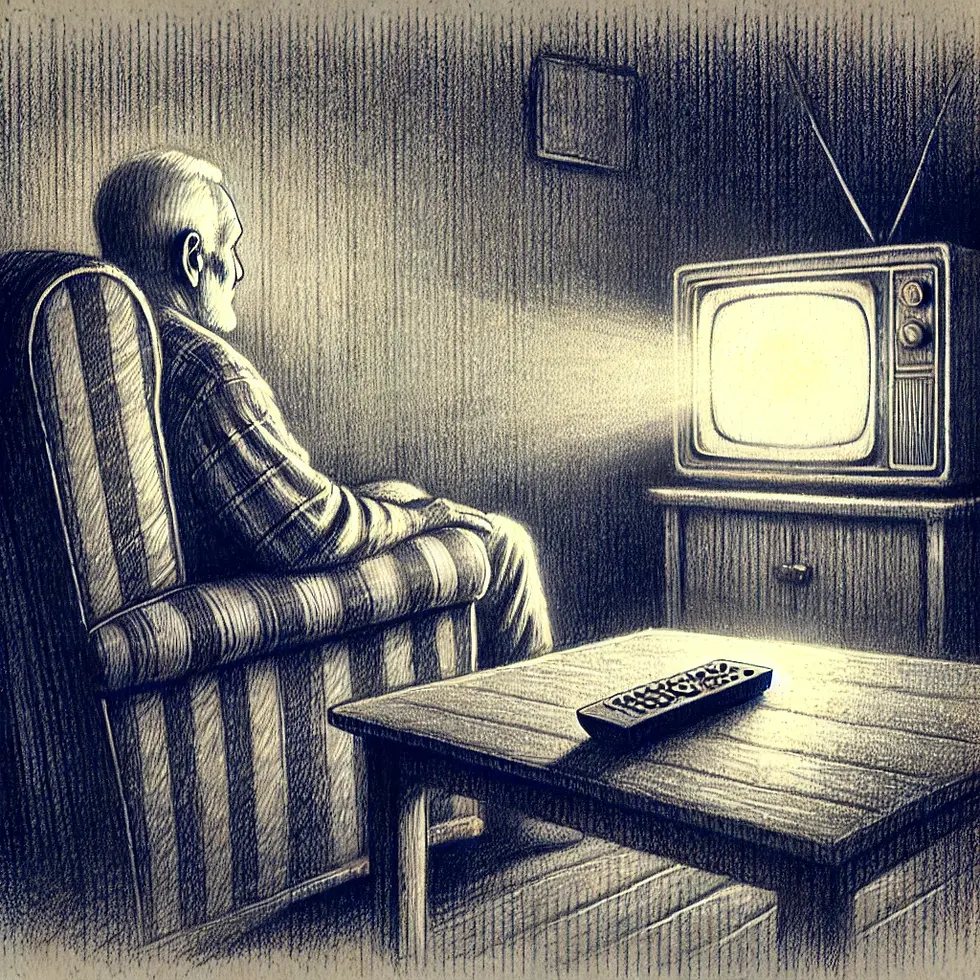
Most days, after I take a morning walk to get some air, taking in wafts of wheat and corn from the surrounding fields, I keep to myself, lounging in front of the box TV with the big, clunky remote that's always disappearing into the couch cushions. The faint hum of the old television always fills gaps in the dimly lit house country house. Between the shows I watch, like Friends, I mostly see ads for Budweiser and Pepsi and, of course, Taco Bell —brands I'm all too familiar with—but occasionally, I catch a glimpse of ads aimed at kids. It's my way of seeing what they're up to. The other day, I saw an ad for Power Rangers, a more popular show than ever this year. I can't quite figure out what it is about the '90s, but kids seem to be obsessed with teenagers who spend their time battling giant monsters in spandex instead of studying for their SATs. This chaotic nonsense makes them happy and excited to take on the world. It always confused me why. Power Rangers always focus on accomplishing things with others, including happiness and having good triumph over evil. Maybe it's the relatability to the characters or the fact that kids can share the concept of playing as the Power Rangers together outside, but kids always find a way to make anything fun. But I'm not sure happiness is all it's cracked up to be, especially if you're all alone.
Kids are full of blissful ignorance in my eyes, and of course, they are not experienced enough to know what the world has in store for them and how easily life can hurt them. They don't understand how quickly life smacks you across the face like a deer lost in the headlights getting turned into roadkill on the highway. As a kid, I had to fast-forward through my childhood because of the household role I was pushed into, and the first time I got to be a child in a way and bring happiness into my life was when I met Sarah.
Right out of high school, I landed a full-time job as a mechanic at Dave's Automotive Parts, and I moved from Iowa to a small town in Kentucky. Lawrenceburg was a great town with tons of open fields and greenery as far as the eye could see. Its rolling hills reminded me a lot of Iowa but without the suffocating memories. I never had the chance to focus on my happiness in my hometown. I never had the chance to make close friends, and life was a little too fast-paced for me. I grew up in a small, worn house where the walls seemed to sigh under the weight of our struggles. With my mom being a single parent after my dad passed when I was three, it was just the two of us living the same routine every day. My mom worked late, and I was left to take care of meals, chores, and everything else at home. I had to grow up fast, putting on my baseball hat and an old backpack, walking to school, and coming home to what I knew would be an empty, cold house. Though I loved my mom, I often felt neglected and had to fend for myself, making it hard to enjoy being a kid. She would always come back from the grocery store, occasionally drink a beer, and fall fast asleep on the sofa. Seeing her in that situation sometimes made me cry, breaking me. Wake up, work, come home, drink a beer, sleep. It wasn't her fault. My mom never knew, but sometimes I tried to escape our reality by playing baseball with local kids almost every week, but the pressure of my responsibilities followed me. The stress bled in, even there, and I couldn't enjoy the game I truly loved. Eventually, I stepped away as it started to feel like just another distraction from the life I had to live. Every moment I was away from my house, I felt I was letting my mother down. As much as I loved my mother, we didn't feel like a family. She always said the same thing to me, explaining, "It is only you and me, and we are the only ones looking out for each other." That saying burned into my mind like the hot iron branding on a cow's skin. I never saw my mom smile once in my life.
When I moved to Lawrenceburg at the tender age of 22, life got a little better, though, so much so that I found my version of happiness. I met Sarah. She was someone I could be happy with, and she changed my life, as I had never had anyone close to experiencing happiness with. I first met her one afternoon when she walked into the shop. She stepped out of her car and looked right at me, and for a moment, I couldn't breathe.

"Hi, I don't know what happened, but my gear shifter stopped working," she said.
"No worries, I can fix that," I replied while trying to wipe engine oil off my overalls, suddenly aware of how messy I looked.
"Thank you so much. I was heading to my parent's house when it broke down. You're a lifesaver, truly. What's your name?"
"Josh," I replied.
"Hi, I'm Sarah. It's nice to meet you."
Something about her cheerfulness made me smile —for the first time in a long time. I got to work, dismantling parts and explaining the mechanics. When I finished, she looked up at me, her brow furrowed.
"How much will that cost?" she asked.
I smiled, a little too confident for my good. "Your phone number."
She blinked, taken aback. "I beg your pardon?"
"Do you want to go for dinner sometime?" I pushed.
She blushed as she realized what I was getting at.
From that moment on, it was like fresh air swept into my life; the rest was a picturesque history. I stepped away from what my mom said to me all those times as a child. For the first time, I shared life's moments with someone who was there for me. Sarah brought that joy into my life. We were inseparable, whether exploring beaches along the coast, hiking through the Cascade Mountains, or painting together. Every moment felt like a new chapter; with her, I finally felt like an actual kid, filled with happiness. But then came the moment when life took everything back. One blistering summer afternoon, Sarah collapsed onto the burning asphalt as we strolled down the dusty country road on a walk.

My heart skipped a beat. I rushed to her side, my breath catching in my chest as I knelt beside her, desperately checking for signs of life. Her body felt limp, too still. I could feel the heat of the pavement seeping through my knees, but it barely registered as I shook her gently, praying she would wake up. I carried her as fast as I could, put her in the car in a rush, and drove her to the hospital. The drive felt like it took hours. Though I couldn't tell you how long it was. The car's engine hummed, but it felt distant, as though I was hearing it underwater. Once I got to the hospital, I screamed at the top of my lungs for help. And then I waited. And I waited. And I waited. I could only focus on the dull, lifeless clock in the corner, staring at it as it rotated systematically. Tick, tock, tick, tock, tick, tock.
Hours later, I heard the door creak open, and the doctor stood before me. The words that followed shattered me. "Stage 4 multiple myeloma," he said, his voice clinical, detached as if he were speaking of someone else. I barely heard the rest of his words. It was like a fog descended, drowning out everything he said. I stood there, frozen, as his words echoed in my mind, but all I could do was look down at the shiny tile floor, my eyes clouded with a single, hot tear that slid down my cheek. I looked around, trying to find help, but there was no one.
Something inside me broke that day. I didn't know how to feel anymore, only numb. It took me a long time to realize I truly felt this way. I felt like I was alone in this world, and even though it wasn't true, a part of me felt like Sarah abandoned me, and it made me believe it hurt me too much to let others into my life. Sarah showed me the key to being happy, but over time, I forgot about it in her absence. I bottled up the pain and disconnected from my childish happiness in the years that followed Sarah taking her last breath because, well, what was the point? I had no one. I threw myself into work, focusing on earning just enough to keep going, to carve out a life where I could be detached from the chaos. Wake up, work, come home, drink a beer, sleep. I became like my mom, but at that moment, I was thankful I didn't have kids of my own. I walled off my heart, my pain blocking it out, and my happiness died with it. Eventually, I lived on my terms after countless engine repairs and the occasional insufferable poker games with a few talkative older men at the local country club. I always kept to myself, just like my mom had once told me to.
The day I retired, about 32 years after the passing of my wife and about 32 years since I had become a widower with no family around me again, I started to look at the world around me for answers. That day, when I got up to get a drink from the refrigerator, I looked out my window. It took a minute for my eyes to focus past the rays of light, but I saw a group of kids playing football together outside in the long green grass, running carefree and laughing under the endless void of the bright summer sky. I felt the world moving on, finding joy through the next generation while I was stuck in my past and afraid to live and get hurt again. At that moment, I couldn't help but feel a twinge of envy toward those children. I might even have to admit it; that's why I've grown to lack understanding about them. I'll give credit where credit is due. Life has taken its toll on me. I never understood kids until Susan, ironically a stubborn child herself, knocked on my door and reminded me what I learned from my life with Sarah.
"Bang, bang, bang," I heard from the door.
I jolted awake from my nap with a groan, rubbing my eyes. "Who is it?" I grumbled, looking over my shoulder.
A soft, meek voice responded, "I have a question for you."
I sighed, pushing myself up from the recliner, feeling every creak and groan of my old body. Grabbing my cane, I shuffled slowly to the door. I peered through the peephole but saw no one.
"Down here," the voice said again.
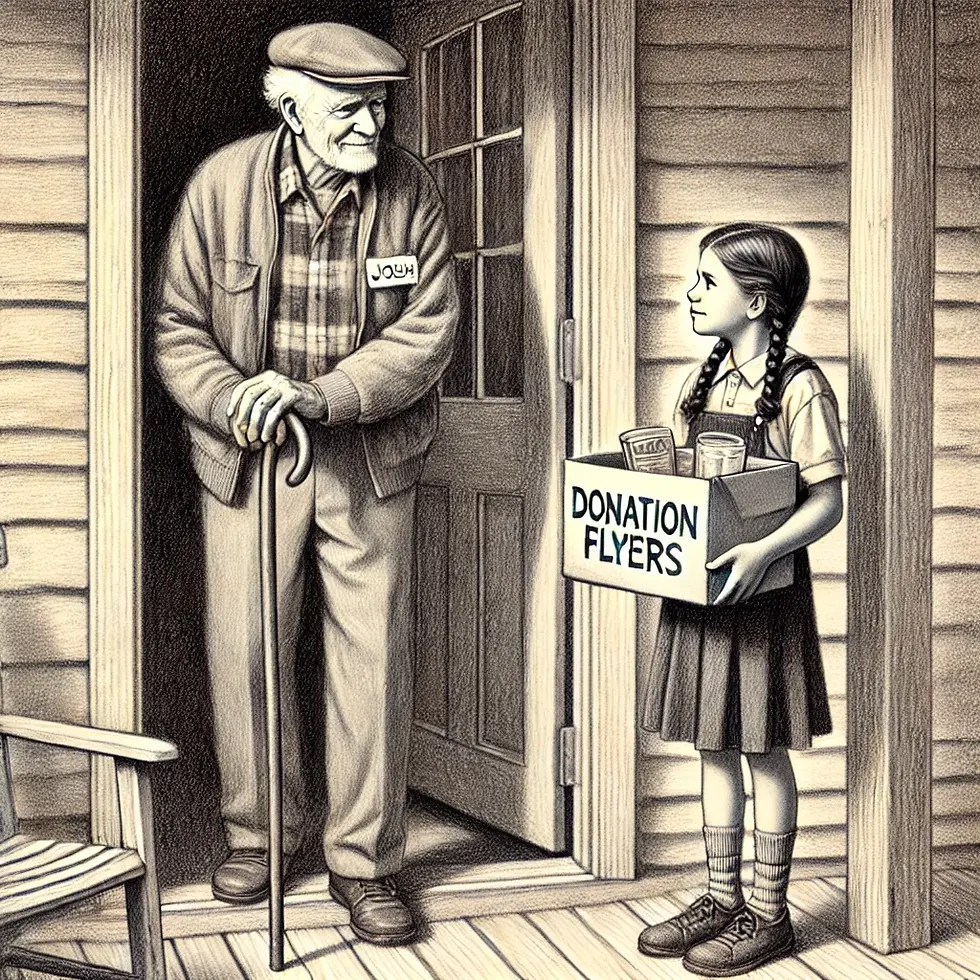
I unlocked the deadbolt, unlatched the rusty chain lock, and opened the door. I then saw a short girl, no older than eleven, holding a cardboard box full of paper in front of her.
"What do you want?" I spat, not bothering to hide my annoyance.
She stood there, unflinching. "I'm part of the neighborhood baseball team, and we're trying to raise $300 in donat-"
I cut her off. "Not interested." I motioned to close the door. I wasn't in the mood to hand out my hard-earned money to some group of entitled kids. Back then, even at her age, I worked for less than a dollar an hour to have a little spending money.
As I began to close the door, a small, dirt-streaked Converse shoe wedged in the gap, blocking me.
"Wait!" she said, her voice more urgent now. "Please, just let me finish."
I paused, looking at her warily. "What is it?"
She looked up at me, her eyes wide open. "You look pretty old. Do you have any kids?"
"No, of course not," I said, my tone sharp.
"Okay, that's what I thought. Do you at least have a wife?" she asked, her voice curious.
"That's none of your business," I replied, irritation creeping into my tone. "Why are you asking me all these questions? I don't like to be bothered."
She hesitated momentarily, looking at the scuffed wood porch, then blurted out, "Well, I don't know if you've noticed, but the park across the street, Polo Park, is in terrible shape. The baseball field's falling apart, and there are all these holes. We need money to fix it so we don't trip and get hurt. Jerry already broke his leg last week." She then reached into her cardboard box, handing me a flyer.
I snatched it from her, slightly crumpling the paper, and grumbled. "Why'd you ask about my family? It's not polite to dig into people's lives like that."
She looked up at me, unbothered. "Well, if you had a kid, wouldn't you want them to have a safe place to play? I wouldn't want my face to fly straight into the ground whenever I tried playing baseball."
"I guess, but you're not my kid, and neither are the others. So why should I donate?" I said, clearly annoyed.
She gave me a determined look. "Why don't you come see for yourself? We're having a neighborhood game right now. Come on, let's go."
"No thanks, I'd rather get back to my nap."
"Nope. You're coming with us. I'm sure it's not fun being alone at home so that we can act as your family." She smiled, practically dragging me along.
"Us? We?" I raised an eyebrow.
"Yup." she proudly said.
Before I could protest further, a group of middle schoolers distributing fliers suddenly appeared on my porch.
"You ever seen a good old Lawrenceburg game?" one of the boys asked, grinning.
"No. I never really paid attention. I stopped watching baseball long ago, and I don't plan to," I replied, still unsure of what was happening.
"Well, you're about to, and it's about time you do then," he said enthusiastically. "It's our team's turn to hop in." He held out a hand. "I'm Aiden, by the way."
I shook his hand and followed him, Susan, and the other kids to the metal stands behind the batter's box. I saw kids from all sorts of different teams in the stands. I had no choice, but something strange happened as I sat down and watched. I saw the kids walk out onto that field, ready to take on the world. I felt my past childhood baseball rekindling, but this time, full of much more happiness. As time went on, the game wasn't just a game anymore. I got invested, almost like I was part of the team. I saw happiness in how the kids moved and the energy they shared. I saw it throughout the game, watching every play until the ninth inning.
"STRIKE THREE, YOU'RE OUT!" the umpire shouted, his voice echoing through the field.
It was the bottom of the ninth, and Susan stepped up to bat. The game was on the line.
The pitcher wound up and threw the first pitch.
"STRIKE ONE!" the umpire's voice rang out again.
Susan squared her shoulders, unshaken, glaring down the pitcher. She was determined, but the pressure was evident. The ball came again, and she swung hard—CRACK, sending it out of play.
"FOUL BALL!" the umpire called.
The tension was thick. Susan adjusted her stance, but the weight of the moment was heavy. The next pitch came, but Susan missed it by no more than an inch.
"STRIKE TWO!" the umpire shouted.
The game had come down to this one final pitch. Both teams were holding their breath, eyes fixed on Susan. Her knees buckled slightly, and she dropped to the ground, her breath heavy, thinking about what to do. I couldn't just sit there anymore. It brought me back to my struggles as a boy playing baseball in a little Iowa town. I stood up, hobbled to the edge of the fence, and called out, not caring who heard me, because I had found my love for the game back, and it was a better second chance at reliving my childhood. It brushed a layer of dust off my heart.
"Susan!" I yelled, my voice carrying across the field. "I believe in you! Just focus on the ball. Aim for the center of your bat and keep your stance wide. Let everything else fade away. You didn't drag me over here to lose. You've got this!"
Susan stood up, nodded, and returned to the plate. She planted her feet, focused, and took a deep breath. The pitcher wound up the final pitch, the fastball flew toward her, and she swung with everything she had.
CRACK!

The bat snapped into two pieces, sending shards of oak wood flying into the air. But in the same instant, the ball soared past the outfielders, over the fence, and out of the field. A home run! The sound that followed—pure, unrestrained joy —was unlike anything I'd heard in years. The kids on both teams flooded the field, and those in the stands stormed and celebrated together. They were no longer separate teams but one group, sharing that moment of victory and happiness. I felt that happiness, too, and it hit me like a wave on the beach, pumping my hands into the air. Escaping the giant group of kids yelling and jumping up and down, Susan entered the dugout. She sat down next to me, and I didn't realize it then, but a light layer of tears filled my eyes.
"Um, are you okay? One of the pieces of my bat didn't hit you, right? She asked.
"Yes, yes. I'm fine. It's just… I haven't seen something full of such happiness in a long time. It was refreshing." I paused. "I must ask you. How?"
"How? What do you mean?" she said, confused.
"It's just a game. How are you all so happy? Why am I happy?" I inquired.
"You're pretty silly. It's because you are old." She laughed. "It's simple—we're together. When I look out there, I see a group of kids, each different but all coming together for a game I love, like wildflowers in a meadow, but all swaying together in the same breeze. Honestly, we wouldn't care what happens in the world. It doesn't matter because we need to be together to be happy. That's why you're happy, I guess." She paused briefly, then said, "That homerun was a moment we all shared."

I looked out into the field at the sky and saw a beautiful sunset, streaks of fiery orange, soft lavender, and molten gold firing out of it as if the sky celebrated all our joy. The light kissed the field, the grass shimmering like emeralds in the fading glow.
"Susan, thank you for bringing me here," I said, handing her three crisp hundred-dollar bills from my wallet. "To fix the field. Please take it."
She took the money, and she paused for a second. "You know what? How about you coach us? Your tips back there weren't that bad."
Susan motioned me to come to the field. Standing up, I walked down to the field, my steps slow but steady up, joining the celebration. Watching that game was my home run.

A week later, after construction had finished on the field, I got out of bed that day, ready to play baseball. I grabbed my cane, shrugged on a rustic leather jacket, and put on my old baseball cap. The distant sound of kids shouting and laughing drifted in from the open window, carried by the breeze from the newly refurbished field. With a cane in my hand, I opened the old door and hobbled toward the field, catching glimpses of their game as I drew closer. The scene grew clearer with every step—the crack of the bat, the cheers, the joy in the air. When I stepped into the dugout, the kids froze, and they dropped their equipment. Following Susan and Aiden, they gathered around me and looked at each other for a second, then at me and yelled, "Welcome to the team, coach!" I couldn't help but smile.
I never quite understood kids. Believe it or not, I used to be one, but I didn't quite understand them until Susan and those kids knocked on my door. These days, when I try to understand kids, I always remind myself that it's maybe not about understanding them; it's about learning from them.
Comments